Filter Categories:
B2B Filter Sourcing
Perforated Support Cores in Replacement Filter Cartridges: A Buyer’s Checklist
November 5, 2026
Share:
A replacement filter cartridge can match the old part’s outside dimensions and still have the wrong support structure. For a perforated support core, the purchasing specification needs to connect geometry, material, flow direction, media contact and end-cap fit. A photograph and a nominal diameter are only a starting point.
The key distinction: a support core carries the filtering layer and provides flow passages. Its perforations do not, by themselves, establish the finished cartridge’s micron rating. Specify the filter medium and its performance requirements separately from the metal support.
This guide helps maintenance buyers, distributors and filter assemblers prepare a component-level enquiry. It applies where the cartridge design actually uses a perforated metal core; expanded metal, mesh liners and other support systems need their own specifications.
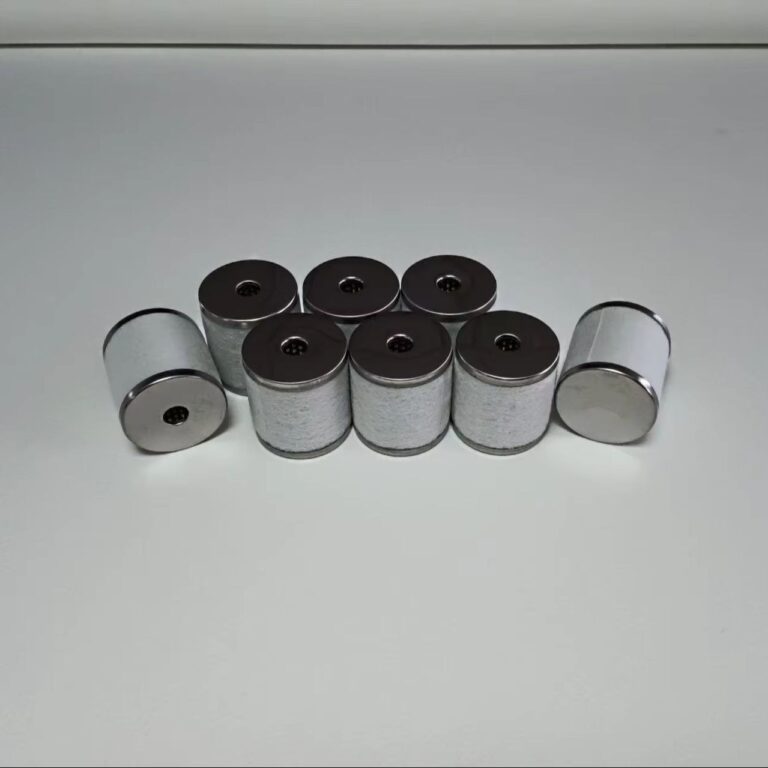
Start by identifying what you are buying: a complete replacement cartridge, a bare support tube, or an assembly of support, media and end fittings. These are different quotation scopes. A tube supplier cannot infer the complete cartridge’s performance from the support drawing alone.
| Part of the assembly | What the buyer should define | What it does not establish alone |
|---|---|---|
| Filtering medium | Media construction, retention requirement, test basis and service conditions | The strength or fit of the finished support assembly |
| Perforated support core | Finished tube geometry, material, hole pattern, seam and support direction | The cartridge’s filtration efficiency or micron rating |
| End caps, joints and seals | Mating dimensions, joining method, sealing material and installation interface | Compatibility with every cartridge sharing the same nominal diameter |
For a complete element, begin with the part reference and equipment details in our replacement filter RFQ checklist. Add a separate support-core drawing when the internal construction is important to the replacement or manufacturing project.
The most useful drawing is one that lets two suppliers quote the same finished component. Mark unknown dimensions as open questions rather than allowing each supplier to make a different assumption.
| Specification item | Information to provide | What to check before approval |
|---|---|---|
| Finished geometry | Outside diameter, inside diameter where relevant, overall length, wall thickness and units | Measurement locations, roundness, straightness and the end condition |
| Hole pattern | Hole shape, diameter or slot dimensions, centre spacing and pattern arrangement | Whether the quoted open area refers to the perforated field or the whole finished part |
| Material | Material designation and the documentation required for the order | That the core, seam, end fittings and any coating are identified separately |
| Media-contact surface | Which surface touches the media and the agreed edge or burr condition | Hole edges, cut ends and the seam along the contact face |
| Seam | Joint type, location, permitted projection and inspection requirement | Whether the seam affects media clearance, a seal or an end-cap joint |
| Solid margins | Unperforated end bands and the longitudinal joining strip | Clear lands for the actual joining and mounting method |
| Operating duty | Flow direction, differential pressure, temperature and any cleaning cycle | That the supplier’s review covers the stated duty and complete assembly |
| Order control | Drawing number, revision, quantity and acceptance records | That sample approval and production use the same controlled revision |
A support located inside a filtering layer and one located outside it perform different structural roles. Record the normal flow direction and any reverse-flow cleaning stage on the assembly drawing. Ask the element manufacturer to review support location against those conditions instead of selecting the core from appearance.
For dust collector cartridge replacements, include the collector model and cleaning arrangement. For air compressor filter enquiries, identify the actual filter family. A support detail from one filter type is not evidence that it suits another.
“Stainless steel tube” leaves the quotation open to interpretation. State the required grade, exposure conditions, cleaning chemicals if applicable, and documentation. If the original specification is unavailable, ask for a material proposal with its assumptions recorded. A visual match is not material verification.
A detailed component page can help a buyer name the features that need to appear on an enquiry. For example, Kaifil’s perforated filter support cores show a defined perforated wall, seam region and solid end zones, with a cutaway that distinguishes the supporting metal from the fine filtering layer.
Use that reference to clarify terminology and construction options, then issue your own drawing and operating requirements. The dimensions shown in a supplier’s example are not a universal replacement specification. The equipment interface and approved assembly determine the part you need.
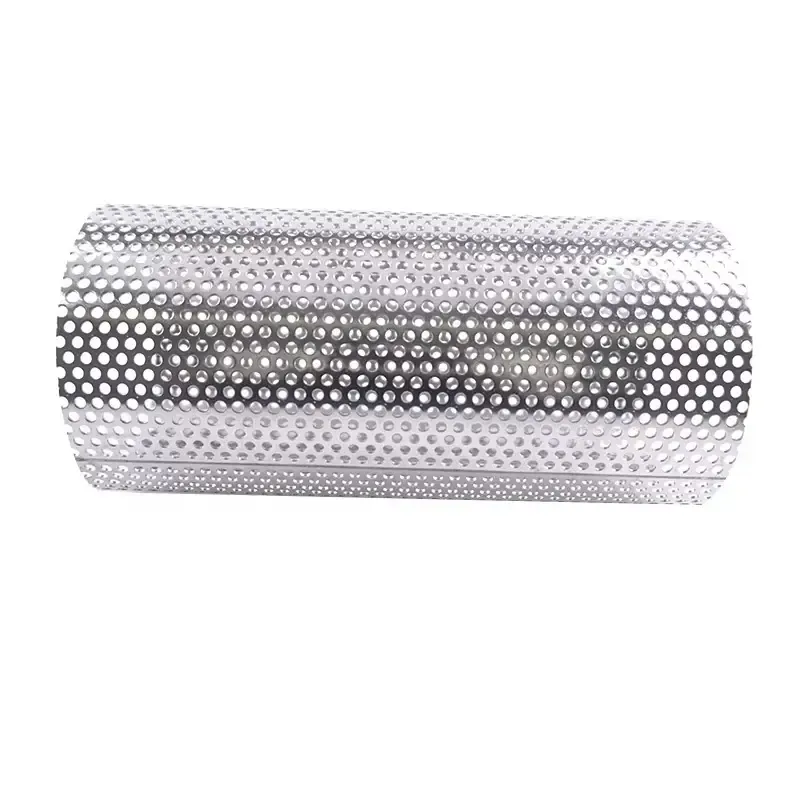
Open area describes how much of a defined surface is occupied by openings. For a regular pattern of round holes on 60-degree staggered centres, the geometric calculation is:
Open area (%) = 90.69 × (hole diameter ÷ centre spacing)²
This pattern-specific relationship is published in the McNICHOLS perforated-metal open-area reference. Use the same units for both dimensions; do not apply this coefficient to straight-centre or slotted patterns.
Worked example: for 3 mm round holes on 5 mm staggered centres, 90.69 × (3 ÷ 5)² = 32.65% open area in the regular perforated field. This is an illustrative geometry calculation, not a recommended specification for a particular filter.
Solid end bands and joining strips reduce the opening area relative to the whole component surface. If only 80% of the developed wall area carries this pattern, a simple area-weighted estimate is 0.80 × 32.65% = 26.12% of the total wall area, before accounting for other obstructions. State the area boundary when comparing quotations.
Neither result is a filtration-efficiency figure, a flow-rate guarantee or a collapse-pressure rating. Request the relevant assembly evaluation or test evidence for those requirements. A larger open-area percentage is not, on its own, proof of a better cartridge.
Agree the acceptance plan before the sample is made. “Same as the photo” is hard to inspect and leaves little basis for resolving a mismatch. Assign a drawing revision and separate dimensional inspection, material records and functional checks.
Keep an approved sample or a clear inspection record for the next order. If the supplier proposes a different seam, thickness or material, treat it as a documented change request. A similar-looking substitute should not silently become the new production standard.
Subject: RFQ — perforated filter support core to drawing [number / revision]
Please quote [sample quantity] first articles and [production quantity] finished support cores.
Supply scope: [bare core / core with fittings / complete filter assembly].
Finished geometry: [OD / ID / length / wall thickness / units].
Material and records: [grade / required certificates or inspection records].
Perforation: [hole shape / size / centre spacing / arrangement].
Solid areas: [end bands / joining strip / other unperforated regions].
Seam and finish: [joint type / location / media-contact surface / edge condition].
Service: [normal flow direction / differential pressure / temperature / cleaning conditions].
Interfaces: [media / end caps / seals / equipment details].
Acceptance: [critical dimensions / agreed checks / required photographs].
Delivery: [destination / packing requirements / requested schedule].Please identify assumptions, exclusions and proposed changes before manufacture. Confirm the drawing revision used for the quotation and sample.
For a complete replacement cartridge, attach the equipment and reference-part details as well. Leader Filters’ dust collector cartridge sample-approval guide explains how to organise the broader buyer review.
No. In a supported-media cartridge, the support-hole dimension describes the metal backing. The filtering layer and its stated test basis establish the retention requirement. Order documents should identify these separately.
Diameter alone does not define length, wall thickness, end fit, seam clearance or the duty the component must support. Supply the full available geometry and identify missing information before comparing offers.
A sample can help establish construction and fit, but wear, deformation and contamination may affect its dimensions. Agree which features are taken from the sample and which are controlled by an approved drawing. Document unresolved material or performance requirements.
No. The pattern must be reviewed with the remaining metal, wall thickness, support span, media contact and assembly duty. Compare the complete requirement rather than a single percentage.
No. Cleaning suitability also depends on the media, joints, adhesives, seals and approved cleaning procedure. Confirm washability for the complete element with its manufacturer.
When you need a complete compatible replacement element, send the part reference, equipment model, photographs and service details through the Leader Filters filter enquiry form. Include the support-core specification when it affects the assembly. Clear component requirements help keep the quotation, sample and repeat order on the same technical basis.